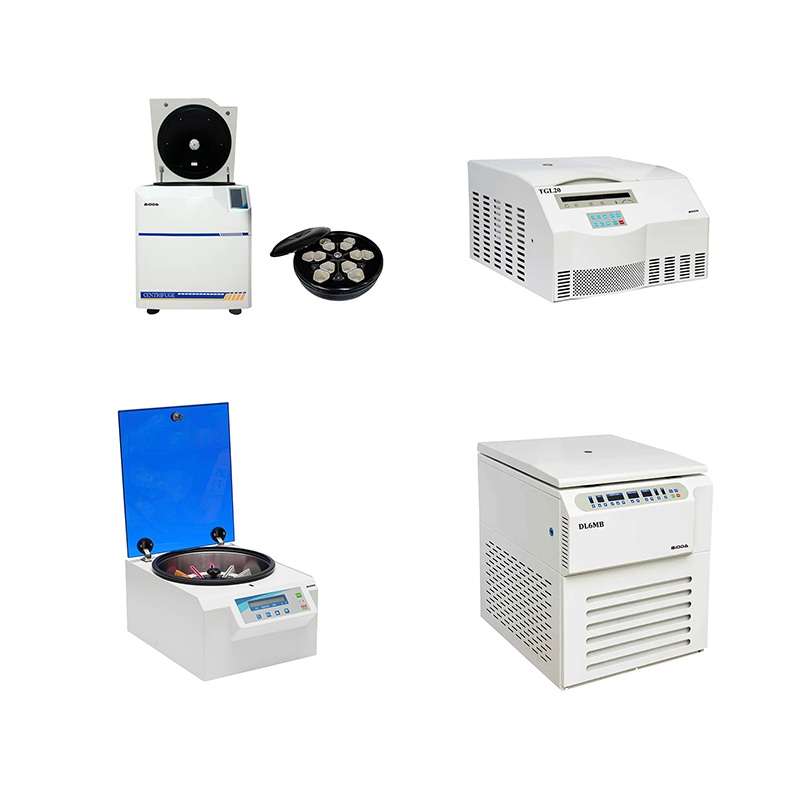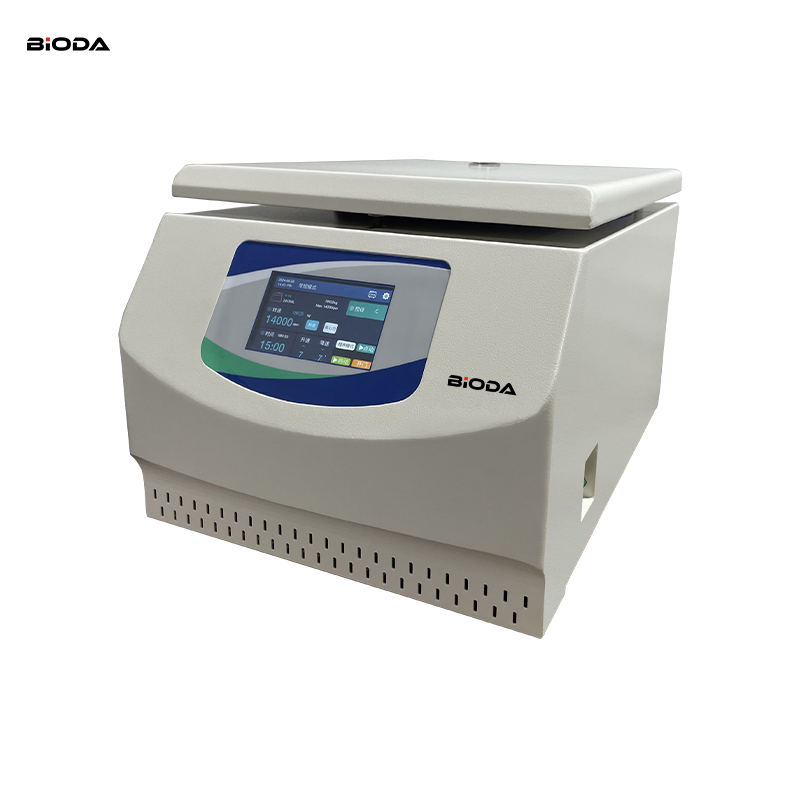

Laboratory centrifuges are among the most important instruments used in scientific research, clinical diagnostics, biotechnology, pharmaceuticals, and industrial laboratories. By utilizing centrifugal force, these devices efficiently separate substances of different densities, enabling researchers to obtain accurate and reliable samples for further analysis.
As laboratory technologies continue to advance, modern centrifuges have become faster, safer, and more intelligent than ever before. This article explores how laboratory centrifuges work, their main applications, and key factors to consider when selecting the right centrifuge for your laboratory.
What Is a Laboratory Centrifuge?
A laboratory centrifuge is a device that rotates samples at high speed to generate centrifugal force. This force causes particles with different densities to separate into distinct layers.
The principle is simple: heavier particles move outward toward the bottom of the tube, while lighter components remain closer to the center.
Centrifuges are commonly used to separate:
Blood components
Cells and cell debris
Proteins
DNA and RNA samples
Chemical suspensions
Environmental samples
Because of their versatility, centrifuges are considered essential equipment in modern laboratories.
How Does a Centrifuge Work?
The operation of a centrifuge is based on centrifugal acceleration.
When sample tubes rotate at high speeds, centrifugal force acts on the particles inside the sample. Depending on their size, shape, and density, particles settle at different rates.
The basic centrifugation process includes:
Loading samples into balanced rotor positions.
Setting the desired speed and operating time.
Starting the centrifuge cycle.
Allowing particles to separate according to density.
Removing and analyzing the separated sample fractions.
Proper balancing is critical because uneven loading may cause vibration, reduced performance, or equipment damage.
Types of Laboratory Centrifuges
Different applications require different centrifuge designs.
1. Low-Speed Centrifuges
Low-speed centrifuges are commonly used in educational laboratories, routine clinical testing, and basic sample preparation.
Typical applications include:
Blood sample separation
Urine analysis
Routine laboratory procedures
2. High-Speed Centrifuges
High-speed centrifuges generate significantly greater centrifugal force and are widely used in biological and biochemical research.
They are suitable for:
Protein purification
Cell harvesting
Microorganism separation
Molecular biology studies
3. Refrigerated Centrifuges
Certain biological samples are sensitive to temperature changes.
Refrigerated centrifuges maintain a controlled low-temperature environment during operation, helping preserve sample integrity.
Common applications include:
DNA and RNA extraction
Enzyme studies
Cell culture research
Pharmaceutical analysis
4. Microcentrifuges
Microcentrifuges are designed for small-volume samples and are frequently used in molecular biology laboratories.
They offer:
Compact design
Rapid acceleration
High rotational speed
Efficient sample processing
Major Applications of Laboratory Centrifuges
Clinical Diagnostics
In hospitals and diagnostic laboratories, centrifuges are used to separate plasma, serum, and blood cells for testing.
Biotechnology Research
Researchers use centrifuges to isolate cells, proteins, nucleic acids, and other biological materials essential for scientific studies.
Pharmaceutical Industry
Centrifuges support drug development, quality control, vaccine production, and pharmaceutical manufacturing processes.
Environmental Testing
Environmental laboratories use centrifuges to analyze water samples, soil extracts, and suspended particles.
Food and Beverage Industry
Food laboratories apply centrifugation techniques to evaluate product quality, composition, and contamination levels.
Key Features of Modern Laboratory Centrifuges
Today's centrifuges offer advanced features that improve efficiency and safety.
Intelligent Control Systems
Modern centrifuges often include:
Digital displays
Touchscreen interfaces
Programmable operating modes
Data storage functions
Safety Protection
To ensure operator safety, many models include:
Automatic lid-lock systems
Imbalance detection
Over-speed protection
Emergency stop functions
Brushless Motors
Brushless motors provide:
Longer service life
Reduced maintenance
Lower noise levels
Greater operational stability
Temperature Control
Refrigerated centrifuges provide accurate cooling systems to protect temperature-sensitive samples during operation.
How to Choose the Right Laboratory Centrifuge
Selecting the appropriate centrifuge depends on several factors.
Sample Type
Determine whether you are processing:
Blood samples
Cell cultures
DNA/RNA samples
Chemical suspensions
Different applications require different centrifuge specifications.
Speed Requirements
Consider the required rotational speed and relative centrifugal force (RCF).
Higher speeds are generally necessary for molecular biology and protein research applications.
Capacity
Evaluate the number and size of sample tubes processed per batch.
High-throughput laboratories often require larger-capacity systems.
Temperature Control
If working with biological samples, refrigerated models may be necessary to maintain sample stability.
Safety Features
Choose equipment equipped with reliable safety systems and international quality certifications.
Common Problems and Solutions
Excessive Vibration
Possible causes:
Unbalanced samples
Improper rotor installation
Solution:
Ensure samples are evenly balanced and verify rotor installation before operation.
Unexpected Noise
Possible causes:
Worn rotor components
Loose accessories
Solution:
Perform routine maintenance and replace damaged components when necessary.
Poor Separation Results
Possible causes:
Incorrect speed settings
Insufficient centrifugation time
Solution:
Optimize operating parameters according to sample characteristics.
Conclusion
Laboratory centrifuges play a critical role in modern scientific research, medical diagnostics, biotechnology, and industrial testing. By providing efficient sample separation, they improve experimental accuracy, productivity, and data reliability.
Whether selecting a low-speed centrifuge for routine laboratory work or a refrigerated high-speed centrifuge for advanced biological research, understanding the working principles and key specifications will help laboratories choose the most suitable solution for their specific applications.
As laboratory automation and precision analysis continue to evolve, centrifuges will remain indispensable instruments for achieving reliable and reproducible scientific results.